Blog · Cutting technologies
Laser or CNC router? Two extremely capable technologies, but used for different materials, finishes and project types. This guide breaks down the real-world differences so you can choose the right process with confidence.
Quick summary – when to use laser cutting vs CNC router
Both laser cutting and CNC routing have clear strengths in fabrication and manufacturing. In practice, the decision usually comes down to the material thickness, the edge finish you need, and whether you require additional machining operations like pockets or countersinks.
Laser cutting
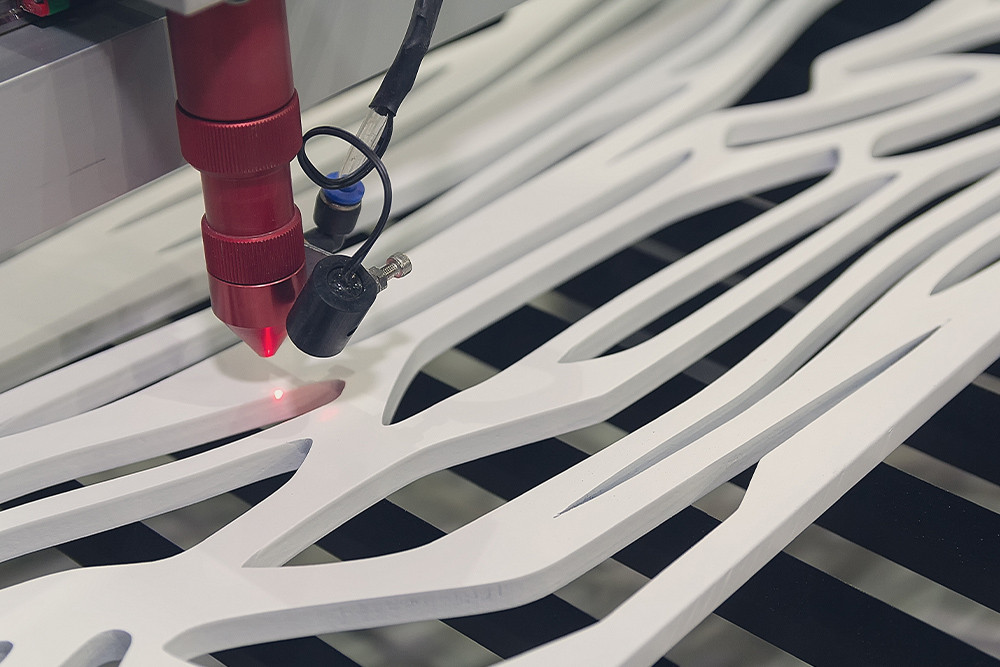
- Best for metals (fiber laser) and fine detail work in acrylic, timber and plastics (CO2 laser).
- Produces extremely tight tolerances and intricate details that CNC routing cannot match.
- Acrylic comes off with flame-polished edges that are ready for display work.
- Fast cutting speeds on thin to mid-gauge materials with minimal finishing required.
- Ideal for signage, precision components, decorative screens and engineering parts.
Internal link: see our laser cutting service page for detailed capabilities and material options.
CNC router cutting
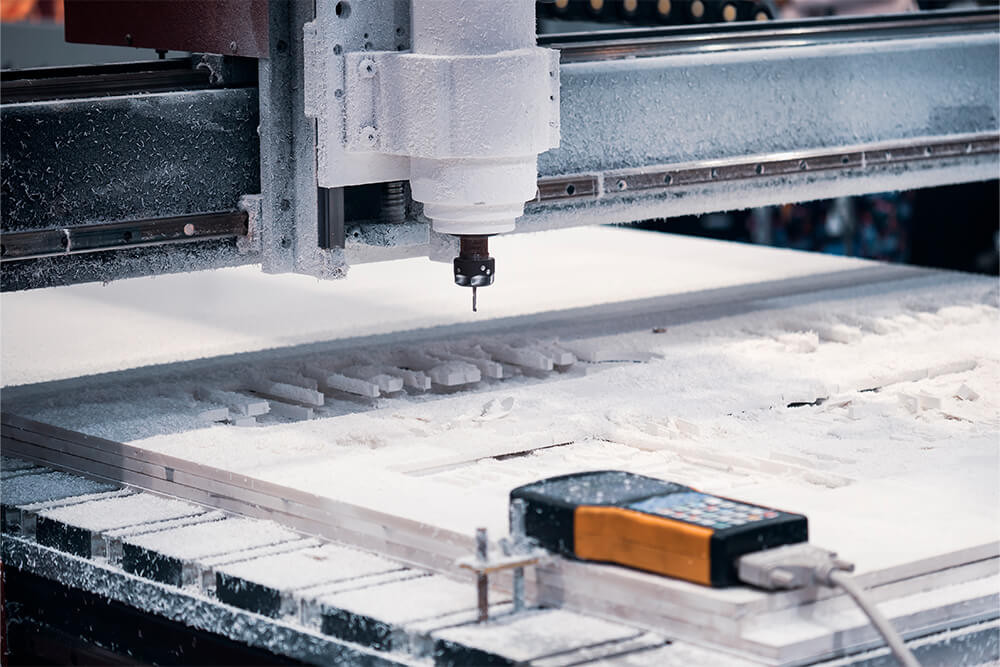
- Best for thicker materials and large sheet types that laser cannot cut efficiently.
- Ideal for timber, MDF, plywood, ACM (aluminium composite), HDPE and engineering plastics.
- Can perform V-grooves, pockets, countersinks, rebates and 3D profiling in a single setup.
- Excellent for structural and fabrication-grade panels where edge finish is less critical.
- Perfect for joinery, shopfitting, building cladding and architectural feature walls.
Internal link: see our CNC router cutting service page for bed size, thickness range and example projects.
Materials each cutting process is best for
The simplest rule is this: laser for metals and fine detail, CNC router for thickness and structural work. There is overlap in materials like MDF and plywood, but each process has a clear advantage depending on the job.
Typical laser cutting materials
- Metals: aluminium, stainless steel, mild steel, brass and copper (fiber laser).
- Acrylic sheet for signage, displays and retail fixtures with polished edges.
- MDF, plywood and timber up to around 12mm–15mm thickness.
- Plastics: PETG, polycarbonate, polypropylene and some HDPE grades.
- Rubbers, cork, gaskets, foams and thin sheet materials.
Related content: fiber laser cutting, CO2 laser cutting, acrylic cutting and metal cutting pages.
Typical CNC router materials
- Timber, hardwood, MDF and plywood sheets from thin to 50mm+ thickness.
- ACM (aluminium composite panel) for cladding, signage and building façades.
- HDPE and engineering plastics including nylon, Delrin and UHMW.
- Foam PVC (Forex), foam board and expanded PVC sheets.
- Laminated panels, veneer boards and thick composite materials.
Related content: CNC router cutting, timber cutting, ACM cutting and MDF cutting service pages.
Edge finish differences between laser and CNC router
The edge quality is one of the biggest differences between these processes. Laser cutting produces heat-sealed or polished edges, while CNC routing produces machined edges that may need light sanding for premium applications.
Laser cutting edge finish
- Acrylic: crystal-clear polished edges that look professional straight off the machine.
- Timber and MDF: slightly darkened, heat-sealed edges that are clean and ready to use.
- Metals (fiber laser): clean, bright edges with nitrogen assist that are easy to weld or paint.
- Plastics: smooth, fused edges with minimal roughness or tool marks.
For display work, signage and visible parts, laser cutting often eliminates the need for post-processing on materials like acrylic and timber.
CNC router edge finish
- Smooth machined edges with a slightly matte appearance.
- Capable of chamfers, bevels, radiused profiles and decorative edge treatments.
- Some materials (especially laminated boards) may require light sanding for premium finish.
- More forgiving for structural or hidden edges where appearance is secondary.
For architectural panels, joinery and structural work, CNC router edges are more than adequate and the ability to add bevels or V-grooves is a major advantage.
Speed and accuracy compared
Laser cutting is generally faster and more precise, especially for fine details and thin materials. CNC routing excels when thickness, tooling options and complex machining operations are part of the job.
Cutting speed
- Laser cutting is faster on thin to mid-gauge materials with intricate details.
- CNC routing is faster when cutting thick materials or when additional machining is required.
- For large-format, simple profiles in thick sheet, CNC routing can be more efficient.
Accuracy and detail
- Laser cutting offers tighter tolerances and finer kerf width for precision components.
- CNC routing delivers excellent accuracy but with slightly wider kerf due to tool diameter.
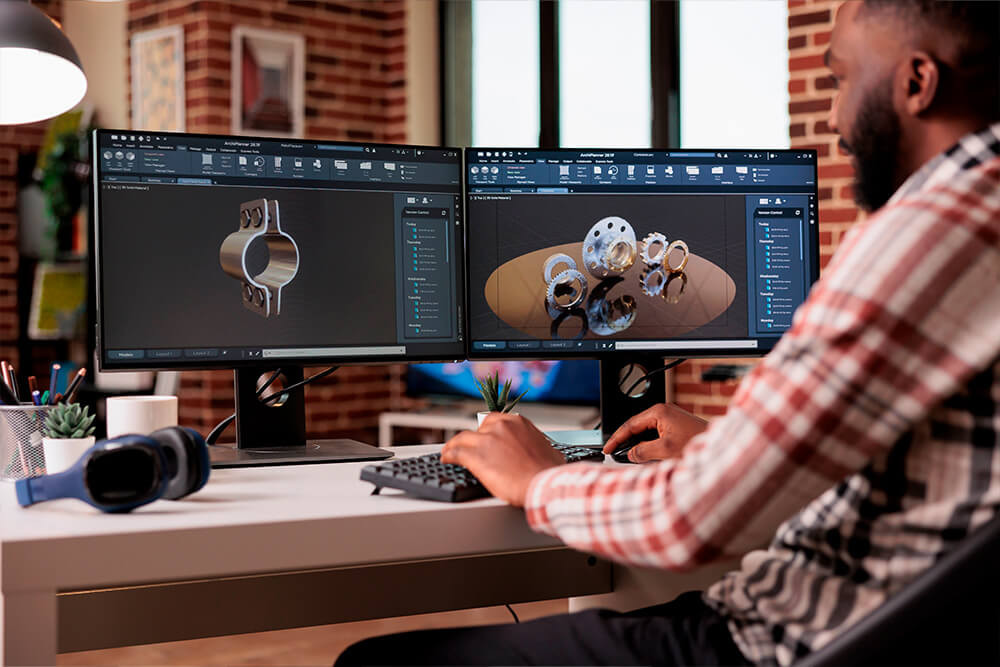
- Both processes are CAD-driven and suited to repeatable, high-accuracy production.
Tooling flexibility
- Laser cutting is limited to through-cutting with no depth control.
- CNC routing can perform pockets, rebates, countersinks and engraving in one pass.
- For multi-step machining, CNC routing is the only practical option.
Cost differences – when laser cutting vs CNC router is cheaper
Costs vary by material, thickness and job complexity, but a few general guidelines will help you understand when each process offers the best value.
When laser cutting is more cost-effective
- Acrylic signage and displays where polished edges reduce finishing labour.
- Thin to mid-gauge metal parts where cutting speed drives down per-part costs.
- High-detail, high-volume production where precision and throughput are critical.
- Projects where clean edges eliminate secondary operations like sanding or deburring.
When CNC routing is more cost-effective
- Thick timber, plywood and MDF panels where laser cutting is too slow or impractical.
- ACM cladding, façade panels and large-format building components.
- Parts needing rebates, pockets, countersinks or V-grooves in a single setup.
- Structural or hidden parts where edge finish is secondary to dimensional accuracy.
The most accurate way to compare costs is to run the same file through each process. At Laser Cutting Experts we can advise whether laser cutting, CNC router or a combination of processes is the most economical option for your material and quantities.
Which industries use laser cutting vs CNC router?
In a well-equipped shop, both processes are available and used for different parts of the same project. Here is how that plays out across common industries.
Laser cutting – typical use cases
- Signage and branding – acrylic letters, logos, lightbox faces and retail displays.
- Engineering and fabrication – precision metal brackets, plates and OEM components.
- Decorative screens – architectural panels, privacy screens and laser-cut artwork.
- Packaging and prototypes – foam case inserts, gaskets and precision-cut samples.
- Shopfitting – metal frames, trim pieces and small decorative timber details.
CNC router – typical use cases
- Joinery and interiors – cabinetry, shelving, feature walls and decorative panels.
- Building cladding – ACM façade panels, shopfront cladding and architectural screens.
- Timber feature panels – reception desks, wall art and large-format timber designs.
- Structural fabrication – base plates, mounting panels and heavy-duty supports.
- Signage and displays – large-format foam PVC signage and dimensional lettering.
How to choose between laser cutting and CNC router
You do not need to become an expert in cutting technologies to make the right decision. Work through these simple questions and you will usually land on the right process quickly.
1. What is the material and thickness?
- If it is metal, start with laser cutting (fiber laser for all common metals).
- If it is acrylic under 10mm and needs polished edges, laser cutting is ideal.
- If it is thick timber, MDF, plywood or ACM, start with CNC router.
2. What edge finish do you need?
- For visible acrylic edges that need to look polished, laser cutting is unmatched.
- For structural or hidden edges, CNC router finish is more than adequate.
- For edges needing chamfers, bevels or profiles, CNC router is the only option.
3. Do you need pockets, rebates or countersinks?
- If yes, CNC router is essential as laser cutting can only cut through material.
- For flat profiles with no depth machining, laser cutting is faster and more precise.
4. Can you combine both processes?
- Many projects use laser cutting for fine details and CNC routing for structural parts.
- For example: laser-cut acrylic faces with CNC-routed timber or ACM backing panels.
Internal link cluster: laser cutting, CNC router, fiber laser cutting and CO2 laser cutting service pages.
Laser cutting vs CNC router – FAQs
Laser Cutting Experts operates both laser cutting and CNC router technologies so that signage, fabrication, joinery and architectural customers can choose the right process without managing multiple suppliers. In one job we might laser-cut acrylic display faces, CNC-route thick MDF backing panels, laser-cut metal brackets and digitally cut foam inserts. The result is a clean, integrated workflow built around flat sheet materials up to 1500mm x 3000mm bed size.
When you are researching laser cutting vs CNC router, the most important considerations are material type, thickness, edge finish requirements and whether you need additional machining operations like pockets or countersinks. Laser cutting delivers exceptional speed and precision on thin to mid-gauge materials with polished or heat-sealed edges, making it ideal for signage, acrylic displays and metal components. CNC routing excels on thicker materials and offers tooling flexibility for structural panels, joinery and architectural cladding where machining capability matters more than edge polish.
Based in Sydney and servicing customers across the East Coast of Australia, Laser Cutting Experts supports one-off prototypes, short runs and ongoing production. If you do not know whether laser cutting or CNC router is right for your project, you can simply send through drawings and material specifications and our team will recommend the most suitable process mix. That way you get the advantages of both technologies without needing to invest in specialist machinery or spend time comparing different suppliers.